

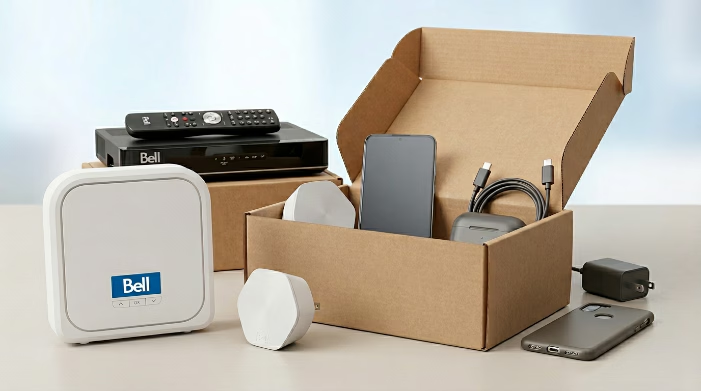
Cable customers have several federal protections involving billing clarity, unauthorized services, refunds, rate notices, and customer service. Cancellation and equipment-return rights are less uniform. Some obligations come from FCC rules, while contracts, state consumer laws, and local franchising requirements may determine what happens after a subscriber decides to end service.
What Cable Bills Must Show
Federal rules require cable bills to be clear, concise, understandable, and itemized for charges such as service and equipment. Since the FCC’s all-in pricing requirements took effect, cable providers also must show the aggregate price for video programming as a clear single line item, subject to the rule’s terms.
The FCC’s cable customer-service standards also address installations, outages, refunds, credits, and customer contact procedures.
Unauthorized Charges Are Restricted
A cable operator generally may not charge a subscriber for service or equipment that the subscriber did not affirmatively request by name. Simply failing to reject a provider’s proposal does not count as an affirmative request under the FCC’s negative-option billing rule.
Consumers following local media coverage about household costs should still compare the report with their own bill. Optional packages, equipment charges, credits, taxes, and promotional terms can create a different total for each account.
| Issue | Federal Rule in Brief | Useful Record |
|---|---|---|
| Bill dispute | Written response required | Complaint copy |
| Equipment | Charges must be identified | Return receipt |
| Refund | Timing rules may apply | Final statement |
| Rate change | Advance notice generally required | Provider notice |
Equipment Returns Can Affect Final Refunds
FCC customer-service standards say refund checks generally must be issued by the next billing cycle after resolution or within 30 days, whichever comes first. When service is terminated, the rule also recognizes return of provider-supplied equipment as a point relevant to refund timing.
Because equipment-return procedures vary, keep serial numbers, photographs, shipping tracking, and counter receipts. Regional reporting platforms may discuss consumer disputes generally, but an account-specific receipt is far stronger evidence that a modem, receiver, remote, or set-top box was returned.
Cancellation Rights Depend on More Than FCC Rules
Federal cable regulations establish substantial customer-service protections, but they do not create a universal right to terminate every cable agreement at any moment without contractual consequences. State law, local franchise rules, promotional terms, and the customer’s service agreement can affect cancellation disputes. Federal law also allows states and franchising authorities to maintain certain additional consumer protections.
People comparing city-focused publications should therefore avoid assuming a cancellation rule described for one state applies everywhere.
Common Cancellation Mistakes to Avoid
Returning equipment is not always the same as canceling the underlying account. A subscriber can hand back hardware while an unresolved service line, add-on, or bundled product remains active.
Another mistake is relying only on a telephone conversation. Ask for a cancellation confirmation number or written acknowledgment, check the effective termination date, and review the next statement. If a disputed fee remains, challenge it promptly using the provider’s formal billing process rather than assuming the balance will disappear automatically.
When to Get Consumer or Legal Help
Escalation may make sense when a provider continues billing after a documented cancellation, claims equipment was never returned despite proof, charges for services never requested, or refuses to address a written billing dispute.
Cable customers can consider the provider’s escalation process, the local franchising authority where applicable, the FCC complaint system, state consumer-protection agencies, or legal counsel. Preserve statements, contracts, return receipts, chat transcripts, and cancellation confirmations before filing a complaint.
Frequently Asked Questions
Can a cable company charge for equipment I never requested?
FCC rules generally prohibit a cable operator from charging for service or equipment that a subscriber did not affirmatively request by name, subject to the details and exceptions in the applicable rule.
How quickly must a cable company respond to a written billing complaint?
Under 47 CFR § 76.1619, a cable operator must respond to a subscriber’s written billing complaint within 30 days. Email may be used for the response in circumstances specified by the rule.
Do cable customers automatically get a penalty-free cancellation right?
Not in every situation. Contract terms, the reason for cancellation, state law, local requirements, and specific federal protections all matter. A general federal cable rule does not erase every valid contractual termination charge.
Close the Account With Evidence
Treat cancellation as a short documentation project. Confirm the termination date, return every provider-owned device through a trackable method, save the receipt, and inspect the final bill. If charges continue, a clean record of what was requested and returned can make a billing complaint far easier to resolve.
This article is for general informational purposes and is not a substitute for professional legal advice.









Leave a Reply